

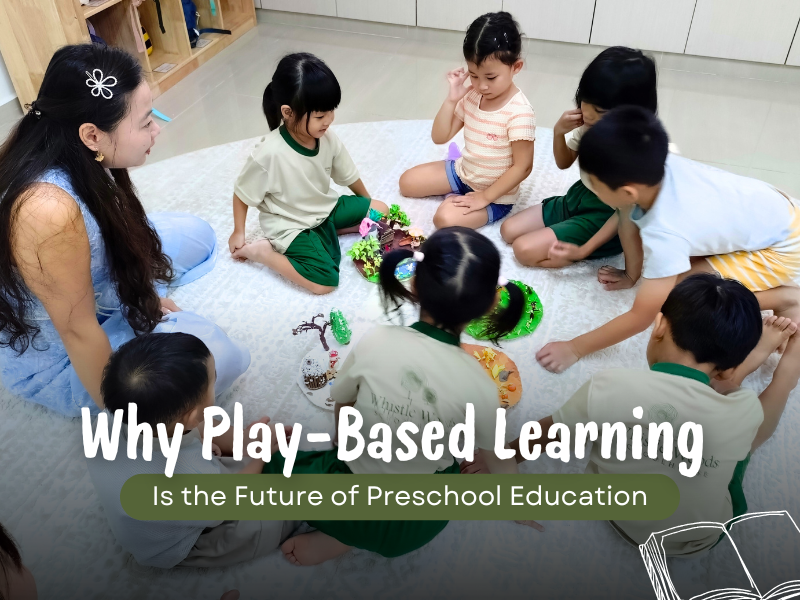
Children learn best when they move, explore, and create. Not through drills, but through play
that feels real to them.
You’ve likely seen how quickly they grasp something when they’re curious.
That’s where learning begins. Not in a lesson plan, but in the moment itself.
Play-based education doesn’t interrupt that. It supports it.
Here are five ways this approach is reshaping early childhood education.
Real growth happens when children follow their own trail
Children absorb more when the experience belongs to them.
Think about the difference between being told how rain works versus dancing in it barefoot.
Play-based classrooms lean into that instinct. They allow time for questions that don’t come with
right answers.
A block tower falling teaches more about gravity than any flashcard.
A pretend café setup does more for early math than writing numbers in rows.
That freedom to explore builds confidence. And it doesn’t come at the expense of structure; it
simply rearranges it in a way that fits the child.
Learning deepens in mixed-age groups
Put younger and older children together, and something interesting happens.
● The older ones begin to take charge, not from ego, but from care
● The younger ones watch, learn, and catch on quicker than adults expect
Many thoughtful schools set up these groups on purpose.
It works best when the setting is slow enough for relationships to form.
This isn’t just about academics. Children begin to see each other as part of the process.
Everyone gets to feel needed.
At our school, we design the groups this way because the dynamic invites leadership, patience,
and empathy—all without a single adult instruction.
The outdoors brings the curriculum to life
Some days, it’s about watching snails. Other days, it’s slipping on wet grass and figuring out
what went wrong.
Nature doesn’t offer outcomes. It offers process. And process is exactly where real learning
hides.
In a nature-based preschool Singapore families trust, play isn’t confined to a tidy corner of the
room. It sprawls.
Children climb, balance, dig, and listen. They start to notice how things shift from morning to
afternoon. They build memory through movement.
This makes the environment a living part of their education; not a backdrop, but a teacher in its
own right.
Imagination does the heavy lifting
You won’t see walls covered in alphabets here. You’ll see scarves, wooden blocks, and small
pots of real herbs.
That might feel simple. But simplicity makes room for depth.
A child who turns a stone into a magic gem is making more than noise.
They’re storytelling. They’re problem-solving. They’re shaping their thoughts in symbols.
Give children open-ended tools and they won’t need much direction. They’ll build entire
narratives out of what they see, feel, and remember.
And that’s where real thinking happens: when the idea starts from the child and not from a
template.
Attention builds best without digital noise
Technology offers convenience, but it often shortens attention.
Preschoolers already live in a world full of sound, light, and speed. What they need is slowness.
In a school where devices stay out of reach, other things come into focus.
A voice reading a story. The scent of something baking. Wind through open windows. These are
not just sensory details; they ground children.
We’ve seen how that kind of rhythm gives children a stronger grip on their own awareness.
It also lets them build true presence, which sets the tone for every kind of learning that follows.
Parents looking for the top preschool in Singapore often come here for this very reason.
Because slowing down feels right.
Final Thoughts
There’s no single right way to educate a child. But there are ways that feel more human.
Play-based learning feels that way—honest, open, shaped around the child instead of shaping
the child to fit.
We hold that idea close in everything we do.
Our spaces are designed with warmth. Our materials invite imagination. Our schedule leaves
room for real moments to unfold.
If your child thrives when given room to explore, you might find that our approach mirrors the
way they already learn best.
Not just play. Real learning. On their terms.