

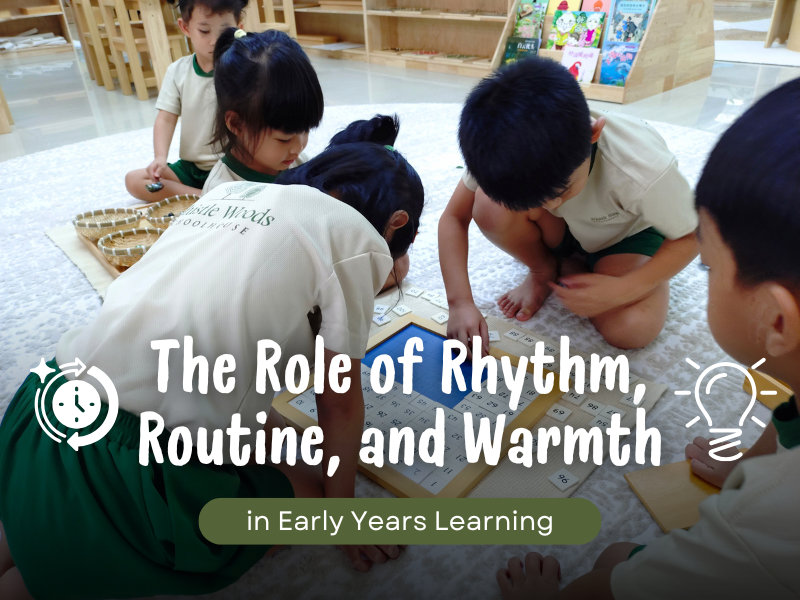
Some children ease into group life without much fuss, while others take a while. They pause before stepping in. They hold close to familiar hands.
What helps both is something steady. Not just a routine, but a felt sense of order and a flow to the day.
Rhythm, routine, and warmth do that work quietly. Together, they offer something children begin to trust, even before they understand it. A montessori preschools in singapore offers the best curated curriculum for effective learning where rhythm, routine and warmth fall in place altogether.
Here’s how they shape early learning in simple, lasting ways.
Rhythm helps children feel time without chasing it
What Montessori and Waldorf Have in Common is a deep respect for rhythm in a child’s daily life. Children follow rhythm with their senses. They watch what happens next. They wait for the part they know. They move when the room moves.
Rhythm makes time feel steady. Morning walks, warm snacks, soft songs before clearing up; all these moments return, and their return helps a child feel safe.
In a Waldorf-Montessori classroom, rhythm replaces the need for constant instruction. The day holds a shape. Their energy levels follow the rhythm of the day. When it’s time for energetic learning, they move and learn with their whole bodies. When it’s time to lie down for a rest, their bodies respond accordingly. The rhythm is already built and felt internally, so there is no struggle and no unwillingness.
Routine gives structure to new learning
Where rhythm flows, routine anchors. A familiar routine helps children know what to expect, including where to put their shoes, how to enter a room, when to gather, and when to rest, an approach often reflected in a Montessori nursery curriculum in Singapore.
This allows learning to feel safe. Instead of constantly adjusting to change, the child uses their energy to explore, notice, and join.
It also makes transitions gentler. Children move more freely between moments when the in-between stays predictable.
You may also read: 10 Questions Every Parent Should Ask Before Choosing a Preschool
Warmth creates a space where effort feels welcome
A child might struggle to thread a needle or carry a jug of water. In a space filled with warmth, that struggle feels safe to hold.
Warmth shows up in tone of voice, facial expression, and gestures. It lives in the way adults move, listen, and guide without pressure.
Children learn more deeply when they feel seen and heard. When correction feels kind, it makes them want to do better. Warmth makes the work of growing feel possible.
When rhythm, routine, and warmth work together, confidence grows
Each part does its own work. But together, they create a container where children stretch gently into the next thing.
They know what to expect. They know how it will feel. They know that someone will be there with them, holding the same shape, day after day.
This consistency builds more than calm. It builds trust. And trust invites children to try, to repeat, to stay with things longer than they usually would.
Final thoughts
In our Waldorf-Montessori classrooms, the flow of the day is not rigidly fixed to a timetable.
Children feel it through tone, movement, and how each part leads calmly into the next.
We hold the routine with care. Transitions move slowly. Repeated actions help children feel steady, even before they can explain why. The warmth in the room brings ease to their effort and trust in their surroundings.
If you are exploring early years education through a nature-rooted preschool in Bukit Timah, we welcome you to visit. Reach out to learn how we hold our days and what that could mean for your child.
Also Read: Why Nature-Based Preschools Are Raising Happier, More Resilient Children in 2026