

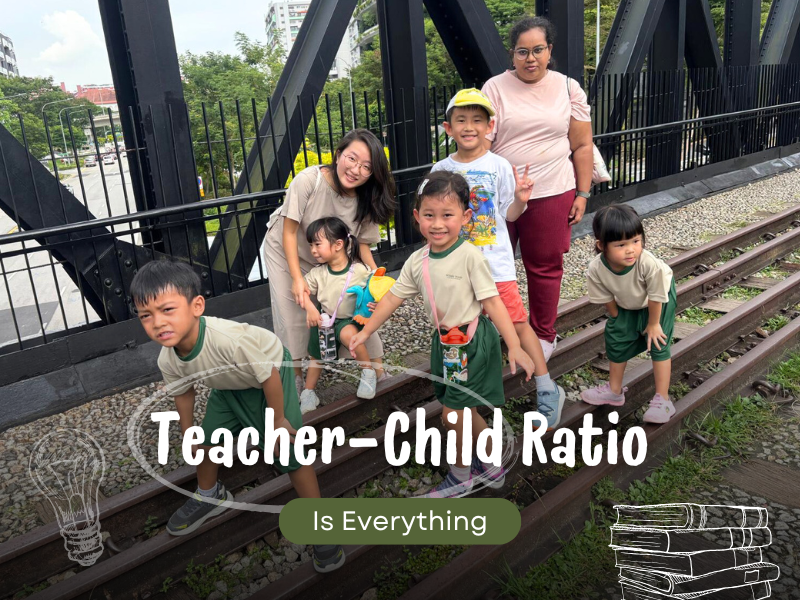
In recent weeks, there has been growing conversation in Singapore about teachers’ workloads and classroom environments. These discussions have encouraged many parents and educators to reflect on how class sizes and teacher–child ratios affect children’s daily learning experiences. While much of the attention has been on primary and secondary schools, these considerations are just as important in early childhood settings.
Preschools are not immune to these challenges. We have spoken with several parents who shared that they were considering a change in preschool because they felt teachers were managing too many children at once. Their hope was simple: that educators would have the time and space to give more attention to their child’s learning and development.
Teaching Today Is About Caring for the Whole Child
In today’s preschool environment, a teacher’s role extends far beyond delivering lessons or facilitating activities. Early childhood educators are also caregivers, observers, and guides for young children. On any given day, teachers support children’s cognitive, social-emotional, physical, and psychological development.
Helping a child manage feelings, supporting peer interactions, encouraging independence, or offering reassurance are foundational to a child’s growth. They require time, presence, and meaningful connection. When teacher–child ratios are high, it becomes increasingly difficult for educators to consistently meet these needs, no matter how experienced or dedicated they are.
If you are a parent caring for your own children at home, you may recognise this challenge. There is only so much attention, energy, and patience one adult can give before it becomes overwhelming.
Why Teacher–Child Ratio Matters
Lower teacher–child ratios lead to better outcomes for both teachers and children. As reflected in the online discussions among educators, many teachers agree that manageable ratios make a meaningful difference to their ability to teach and care well. When teachers are responsible for a reasonable number of children, they feel more supported and in control. This directly impacts their well-being and allows them to provide more thoughtful, responsive, and consistent care.
For children, this translates into:
- Stronger, more secure relationships with teachers
- Greater emotional safety and confidence
- Increased opportunities for personalised guidance
- Calmer classrooms with fewer behavioural challenges
A Meaningful Investment in Quality
Maintaining low teacher–child ratios is the largest cost investment for any preschool. Staffing makes up a significant portion of operational costs, and choosing to keep ratios low requires a strong conviction that it is the right thing to do.
However, it is also the most meaningful investment a preschool can make. It directly affects the quality of care, the sustainability of the teaching team, and the daily experiences of children in the classroom. In early childhood education, where relationships are central to learning, this investment yields the greatest return – happy teachers, thriving children.
At Whistle Woods Schoolhouse, teacher–child ratio is not just a guideline. It is a conviction and a commitment, because we believe that the ratio truly is everything in creating a meaningful preschool experience.