

Many parents have a child who seems to be active, sometimes overactive from morning onwards. Breakfast can drift, getting dressed can stretch longer, and you can feel your child’s mind hovering over five new things at a time. It often translates into action – some incomplete, some messy – in short, chances of hotchpotch seem to be more. This can feel tiring for the whole family at times.
We, at our boutique preschool in Singapore, guide parents so that they do not feel at a loss with their hyperactive little one. The key is to guide a child’s natural energy to flow with the day’s rhythm, weaving in appropriate durations with high and low energy levels.
A child with a great deal of energy often responds to changes in the space, the pace and the kind of movement available, in their own way. The intervention of an adult in an authoritarian way often makes a child step back in fear, or make unintentional mistakes. So how a parent, teacher or staff guides a child, matters!
A calm room or space can help a hyperactive child feel at ease
Some children react to the sound, an object or some kind of movement around them way too quickly. Too many toys in view, a screen nearby, or people moving quickly through the room can leave a child feeling jumpy and easily distracted.
Parents often notice a change when the space feels calmer and less full.
In a Waldorf-Montessori-inspired space, the furniture is made with natural wood and the decor, books, art materials are displayed with order and intention. That creates an instant, calming connection for the child. This visual harmony replaces chaos with invitation. In such an environment, even the most spirited child feels a natural pull to focus on one task at a time, completing it with care and without the frantic urge to rush toward the next distraction.
Meaningful movement weaved into the day supports the active needs of a child
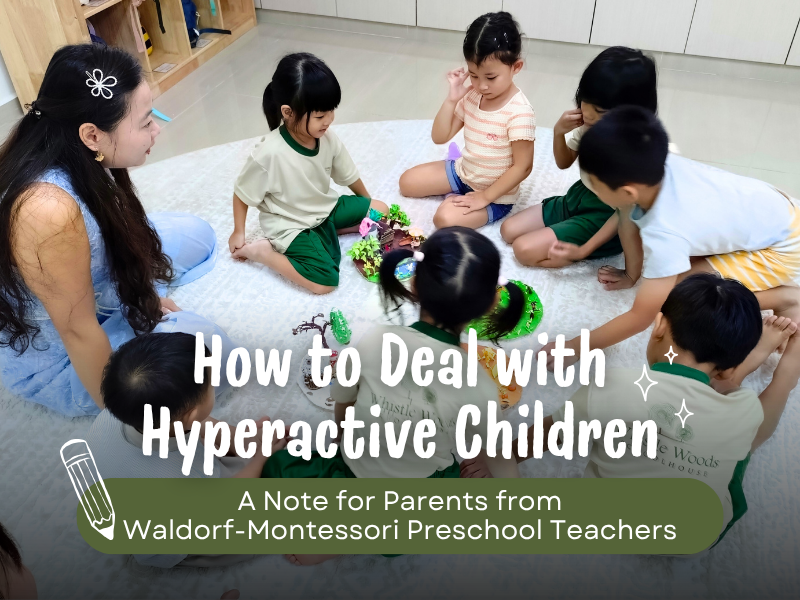
In the Waldorf-Montessori classroom, teachers artfully bridge the gap between high energy and deep focus by weaving purposeful movement into the daily rhythm. During circle time, children might engage in coordinated games or rhythmic verses that channel their physical drive into a shared experience. This active start leads them into a period of quiet listening; once their bodies have been “heard,” they are far better equipped to sit still for a story. This sequence culminates in hands-on work, whether it’s a craft or a science experiment, allowing that energy to flow directly into a meaningful task.
On some days, this process starts even earlier on the playground. By providing ample time for climbing, digging, and running at the start of the day, a Waldorf-Montessori preschool allows children to thoroughly expend their “big” physical energy first. When they finally step into the classroom, the internal urge to fidget or wiggle has been satisfied. Instead of fighting their own restlessness, their bodies are naturally primed and ready to meet the quiet demands of more academic work.
A steady flow through the day can make life easier for both child and parent.
Children with a great deal of energy often do better when the day follows a shape they come to know well. Meals at regular times, familiar ways of getting ready, repeated cues for tidying up, and a gentle transition into rest can help the child feel more held by the day.
Parents often notice this in small but real ways. Dressing moves more smoothly when it follows the same order. Tidying feels lighter when the cue stays familiar. Rest becomes easier when the child knows what comes before it.
Waldorf-Montessori practice gives plenty of weight to this kind of dependable structure because it helps children feel safe and balanced, and they find a good rhythm in their own way.
Calmness of an adult can change the pace of the whole moment.
Children often take their lead from the adult nearest to them, especially when they already feel stirred up.
- A quick voice, a long stream of instructions, or repeated reminders can add more pressure to a child who already feels full.
- A steadier response often helps more. One clear sentence makes a child more eager and capable to absorb what is being told. Gentle eye contact can help.
- A hand offered at the right time, or an invitation to carry something to another part of the room, can shift the whole interaction.
Final Thoughts
A child with a lot of energy needs the right guidance, so that he can channel the energy in the right way throughout the day without feeling clumsy.
Many parents find progress when the home feels calmer, the body has useful work to do, and the adult response carries more steadiness.
We hold these things close in our Waldorf-Montessori approach through practical activity, stories, outdoor time, and a school day that moves with care.
In our Bukit Timah preschool, children often channel their energy usefully through doing – carrying, pouring, kneading, and helping with simple tasks. If this way of supporting children feels right for your family, get in touch with us today.