

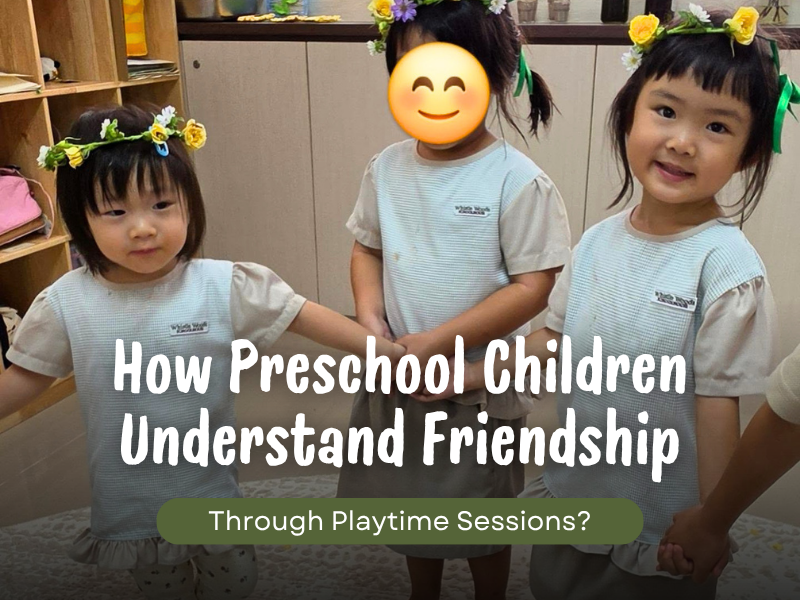
Children love to play together.
The little ones like to prance around, fight, build cute things, draw as they wish, share toys, laugh, and drown in their own little worlds. Engaging in absolute fun and frolic comes easy to children.
But playtime is not only about simple fun. Young children can also learn many social lessons alongside. Children do not understand friendship immediately. They tend to discover it slowly, little by little, through various experiences. And when they play in a preschool environment, they learn much more.
Sharing Teaches Children to Care
Children can be protective about their favourite toys.
“My toy.”
“My turn.”
“I had it first.”
Such expression of feelings is quite natural. However, as children start to express themselves, they get to learn about others and identify with the needs and feelings of others, too.
Playtimes are all about getting to know other young minds and hence begins the art of sharing. They understand that they have to share their toys, they have to take turns and sometimes wait for other kids to join in, too.
In the beginning, these things might be quite natural. Slowly, they begin to learn small lessons – every day. By sharing, they learn caring; considering others, thinking about their emotions too. They understand that friendship is better when everybody gets a chance to participate.
Cooperation Builds Stronger Bonds
Children cannot play alone. Not always. Not all games.
Completing a puzzle together. Building a large block tower. Playing different roles. Creating a train with chairs.
Humans need each other. And it starts from childhood.
As children cooperate, they learn to express their ideas. They have to listen to their friends. They understand how fun can double up when they play together.
Cooperation is essential for friendship. And children discover that early. The little ones understand how difficult things can be when they take up the task of doing something all on their own. With friends around, it can be a cakewalk.
Teaches Children to Understand Feelings
Children experience big emotions.
Happiness. Sadness. Frustration. Anger. Jealousy. Excitement.
These emotions appear naturally. Almost every time, when they play.
Children become happy when they play together. They get sad after losing a toy. They get excited when a new friend joins in with a new toy. They can also become jealous at the sight of it.
When they experience these emotions, they understand themselves better. They can also understand which emotions their friends are experiencing at different times.
They notice an unhappy friend. They ask about what happened. They offer comfort.
That is how empathy begins.
Helps Children Resolve Conflicts
Friends disagree. And it is okay.
Two children may look for the same toy. A tower may fall down by accident. Someone may not like the rules of a game.
And it leads to a conflict. That is quite normal in childhood.
What matters is how children learn to handle it.
In a preschool environment, they can get gentle guidance. They get encouraged to talk about their feelings. They listen to the point of view of their friends. And they understand that they have to find solutions together.
They discover that disagreements are normal. Friendship does not have to end for that. Sometimes, everything can be better by saying sorry, trying again or taking turns.
Encourages Inclusion and Belonging
Every child is different.
Some children observe quietly. Others speak much. Some like to join group activities immediately. Others may need more time.
Playtime creates opportunities for inclusion.
Children learn to invite others. They understand that they have to make space for another kid. They have to appreciate differences in opinion.
But they get to enjoy a sense of belonging.
A simple invitation — “Come play with us” — can mean so much to a little child.
Builds Confidence in Social Situations
Playing together also builds confidence.
When children interact with others successfully, they get more confident.
They understand how to begin a conversation. How to join a game. How to express what they want.
With each positive interaction, they can move to the next one with ease. It builds their social skills. And helps them to make more friends.
At Whistle Woods Schoolhouse, your child can play, make friends and learn how to be sociable. We gift a beautiful socially happening learning journey to every child. It is the wide range of emotions – laughter, happiness, anger, disappointment and even small disagreements which help the little ones to understand the essence of friendship.
See how we can help your child to make friends, through playtime sessions.
Visit us now.